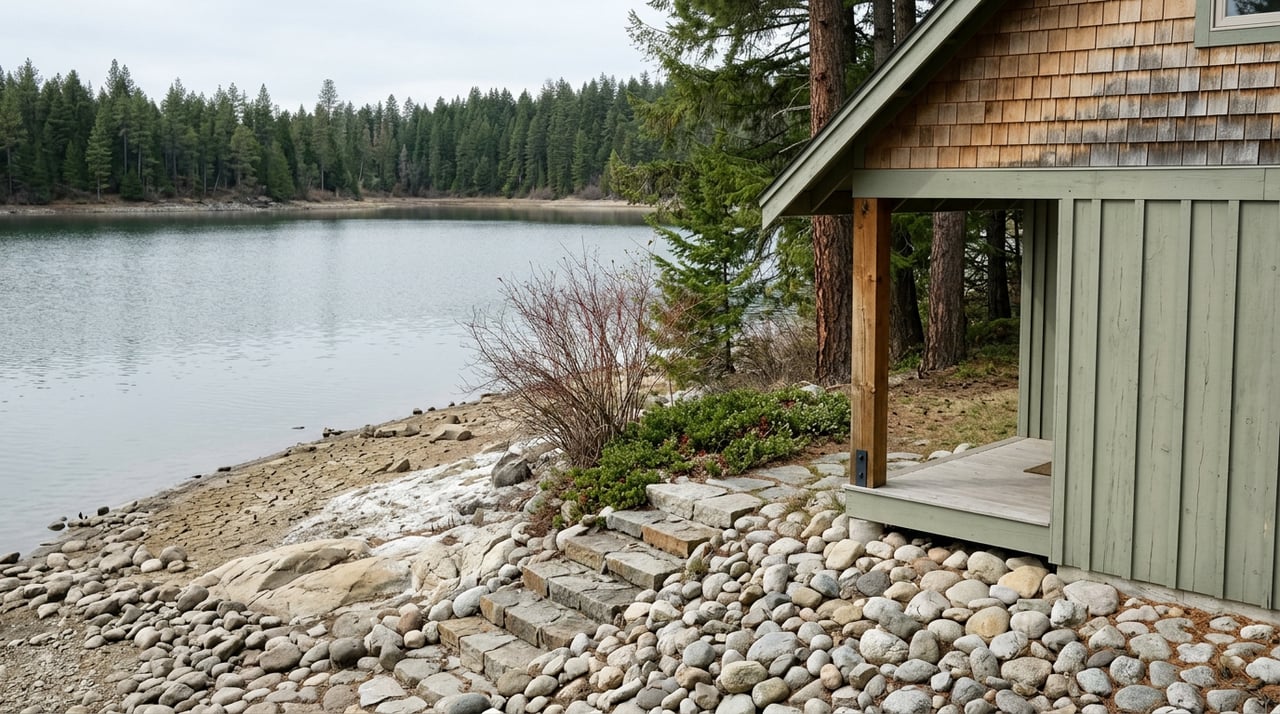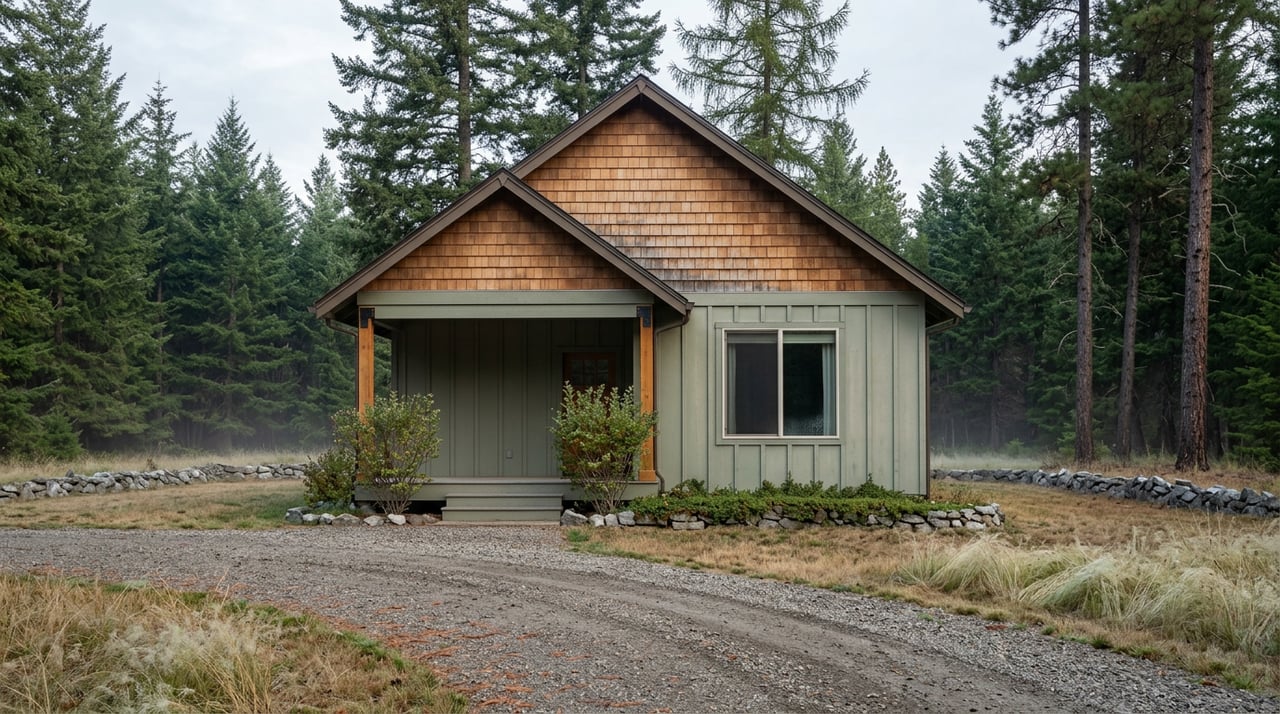
A Florida couple bought five acres on East Blanchard Lake Road, in a subdivision south of Whitefish, in November 2020. They got Flathead County to approve a short-term rental permit. They listed the place through Airbnb and VRBO with the help of I Love Whitefish Vacation Rentals, and by 2022 the rental was pulling in more than $55,000 in gross income. Court filings from the case show they had 88 nights already booked for 2023, with projected income of $45,599.
Then their neighbors sued, and in 2025 the Montana Supreme Court sided with the neighbors. The permit didn't matter. The county approval didn't matter. What mattered was the subdivision's original covenants, recorded when the land was first platted, which dedicated it to "country residential living" and barred any commercial use. The court read that language as broad enough to shut down a working, profitable, government-permitted rental business.
If you're weighing a Whitefish property for its rental potential, that ruling is the fact worth sitting with before you run any spreadsheet. A permit tells you the government will let you operate. It says nothing about whether your neighbors, or the paperwork already recorded against your parcel, will let you keep operating.
A Permit Is a Floor, Not a Ceiling
The case is Brandt v. R&R Mountain Escapes, and it's worth understanding because it overturns the assumption most out-of-state buyers carry into a Montana purchase: that a permit is the finish line. Flathead County had granted R&R's short-term rental permit in 2022. The district court still ruled against them in November 2023, and the Montana Supreme Court affirmed that ruling in July 2025, finding that the covenants' prohibition on "any commercial purpose whatsoever" covered nightly rentals even though the property functioned, day to day, like any other home.
That outcome wasn't automatic. Five years earlier, in Craig Tracts v. Brown Drake, the same court had reached the opposite conclusion on a different property, ruling that a covenant restricting land to "residential purposes only" was ambiguous and didn't clearly prohibit short-term rentals. Two subdivisions, two sets of covenant language, two different outcomes. During oral argument in the Brandt case, Justice Cody Swanson put the tension plainly: "We all need to know where the line is."
That line runs through the specific wording of your subdivision's declaration, not through any statewide rule. A permit from the county or the city tells you rentals are allowed in principle. It does not tell you whether the covenant recorded against your specific lot agrees.
Two Separate Gates Before You Even Get to the HOA
Before covenants even enter the picture, a Whitefish property has to clear a zoning gate first, and the two gates don't always point the same direction.
Inside Whitefish city limits, short-term rentals are permitted only in five zoning districts: WB-3, WRR-1, WRR-2, WRB-1, and WRB-2. The city maintains an interactive zoning map so a buyer can check a specific parcel before writing an offer. Land outside those five districts, including most of the ordinary residential neighborhoods that make up the bulk of in-town housing stock, simply isn't eligible for a nightly rental permit, no matter how strong the covenant language is.
Step outside city limits into unincorporated Flathead County, and that zoning restriction disappears, replaced by the county's own land use rules. This is exactly the terrain the Brandt property sat in. And that's where covenants become the real gatekeeper: a rural parcel with no city zoning problem at all can still lose its rental use entirely if the subdivision's original declaration was written broadly enough.
The practical takeaway is that a buyer needs to check both layers, not one. City parcel: confirm the zoning district first. County parcel: assume covenants are the binding document and read the actual declaration, not just a listing agent's assurance that "rentals are allowed here."
The Tax Bill Changes Even If You Clear Both Gates
Suppose a property passes both tests. It sits in a permitted city zone, or its county covenants are silent on commercial use. There's still a third variable that changes the return math for 2026, and it has nothing to do with permits or neighbors.
Montana's legislature passed two companion bills in 2025, House Bill 231 and Senate Bill 542, rebuilding how residential property gets taxed starting in 2026. The reform splits residential property into two tracks. A primary residence, or a long-term rental leased for 28 days or more at a stretch for at least seven months of the year, qualifies for a "homestead" rate that's tiered by value. Everything else, including second homes and short-term rentals, gets taxed at a flat rate on its full assessed value.
| Property type | 2026 tax rate |
|---|---|
| Homestead/long-term rental, value up to statewide median (~$395,400) | 0.76% |
| Homestead/long-term rental, median to 2x median | 0.90% |
| Homestead/long-term rental, 2x to 4x median | 1.10% |
| Homestead/long-term rental, above 4x median | 1.90% |
| Second home or short-term rental, any value | 1.90% flat |
A property management company operating in Whitefish ran the math on a $500,000 vacation rental and estimated the annual tax bill could climb from roughly $7,800 to $11,000, a 40 to 50 percent jump, once the flat rate is fully phased in for the 2026 tax year. The exact number for any given parcel depends on local mill levies, which vary by city, county, and school district, so treat that figure as illustrative rather than a quote for your specific address. What's not in question is the direction: a property that doesn't qualify as a primary residence or a long-term rental is now taxed differently, and more heavily, than it would have been under the old system.
That matters for underwriting a Whitefish rental purchase because most buyers price their expected return using last year's tax bill, or a rough estimate pulled from a portal listing. Neither reflects what the property will actually owe once the new classification takes hold.
What This Actually Means Before You Write an Offer
Put the three pieces together and the sequence for a buyer considering rental income looks like this:
- Check the parcel's zoning district against the city's short-term rental map if it's inside city limits. Outside those five zones, rental use isn't available at any price.
- Request the actual recorded covenants and declaration for the subdivision, not just confirmation that a permit exists or that a comparable home down the road already rents nightly. Brandt shows a permit and an existing rental history didn't protect the operator once a lawsuit tested the underlying language.
- Model your carrying costs using the 2026 flat 1.9% rate if the property will be a second home or short-term rental, not the tiered homestead schedule, and not last year's bill.
- If a listing agent or seller tells you "everyone here rents," ask them to point to the specific covenant clause that says so. Ambiguous language cuts both ways, as Craig Tracts and Brandt show.
None of this is legal or tax advice, and covenant language, county classifications, and mill levies vary parcel by parcel. A local title company, a real estate attorney, and the Montana Department of Revenue are the right places to confirm specifics for any one property.
A Few Questions Worth Asking
Does an existing short-term rental permit protect a buyer after closing? Not automatically. The Brandt case shows a valid county permit did not stop a covenant challenge from succeeding in court. A permit confirms government approval. It doesn't resolve private restrictions recorded against the land.
If a property is outside Whitefish city limits, does zoning even apply? City zoning rules, including the five-district STR restriction, apply only within Whitefish city limits. County parcels follow Flathead County's separate land use rules, but as Brandt demonstrates, subdivision covenants can be the more binding constraint of the two.
How much more will taxes actually run in 2026? It depends on the property's value and local mill levies, but the structural shift is clear: homestead-qualified properties get a tiered rate starting at 0.76 percent, while second homes and short-term rentals pay a flat 1.9 percent on full assessed value. The Montana Department of Revenue's 2026 property tax page lays out the full rate structure for anyone modeling a specific purchase.
A Whitefish property can be a genuinely good investment. The math just runs through zoning maps, recorded covenants, and a new tax schedule before it runs through nightly rates. Buyers who check all three before closing are the ones who don't end up in front of a judge explaining why they thought a permit was the whole story.
If you're looking at a specific Whitefish parcel and want a straight read on what its zoning, its covenants, or the new tax classification actually mean for your numbers, Charity Waldo has walked local buyers through exactly this kind of due diligence. Talk to Charity, get your free valuation, and find out what the property will really cost and allow before you write the offer.