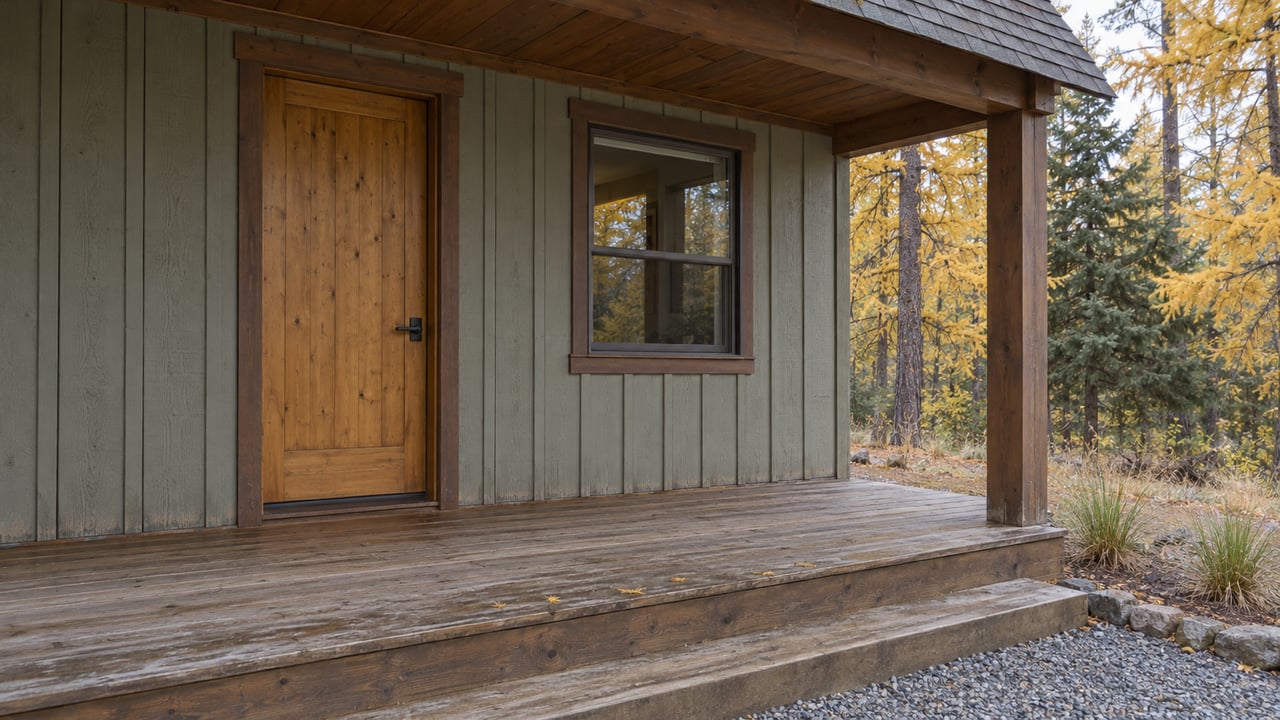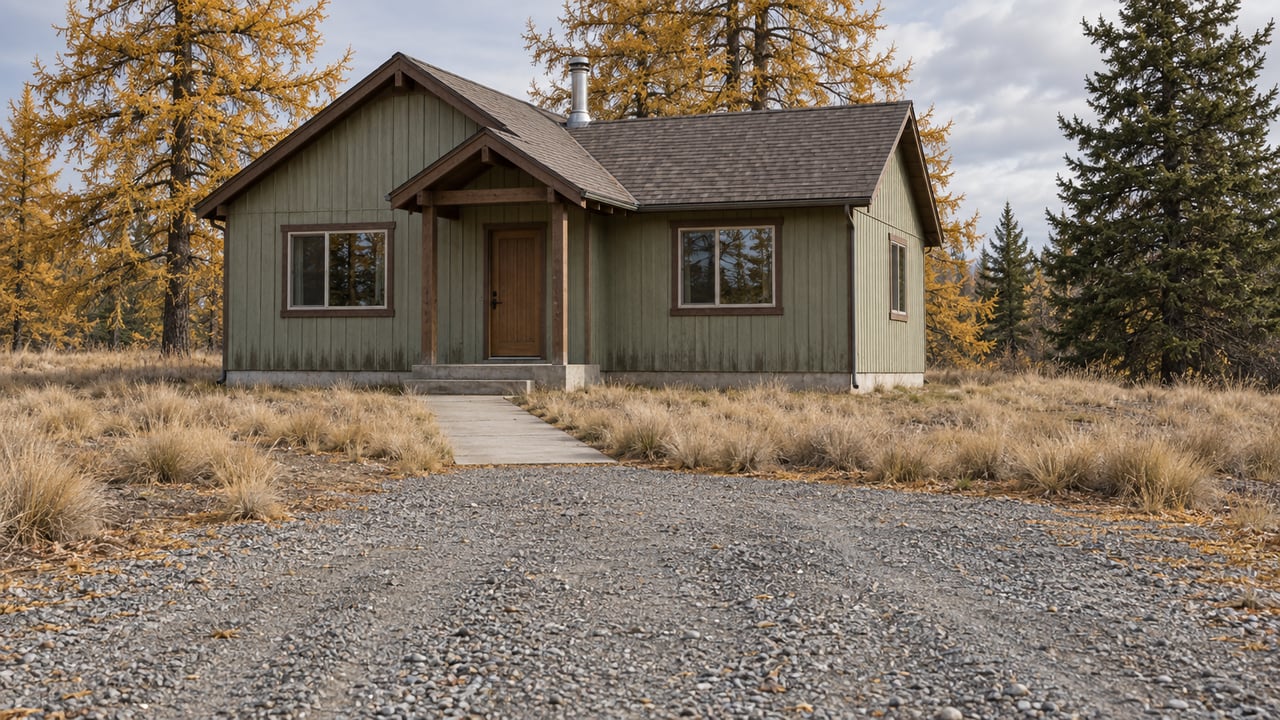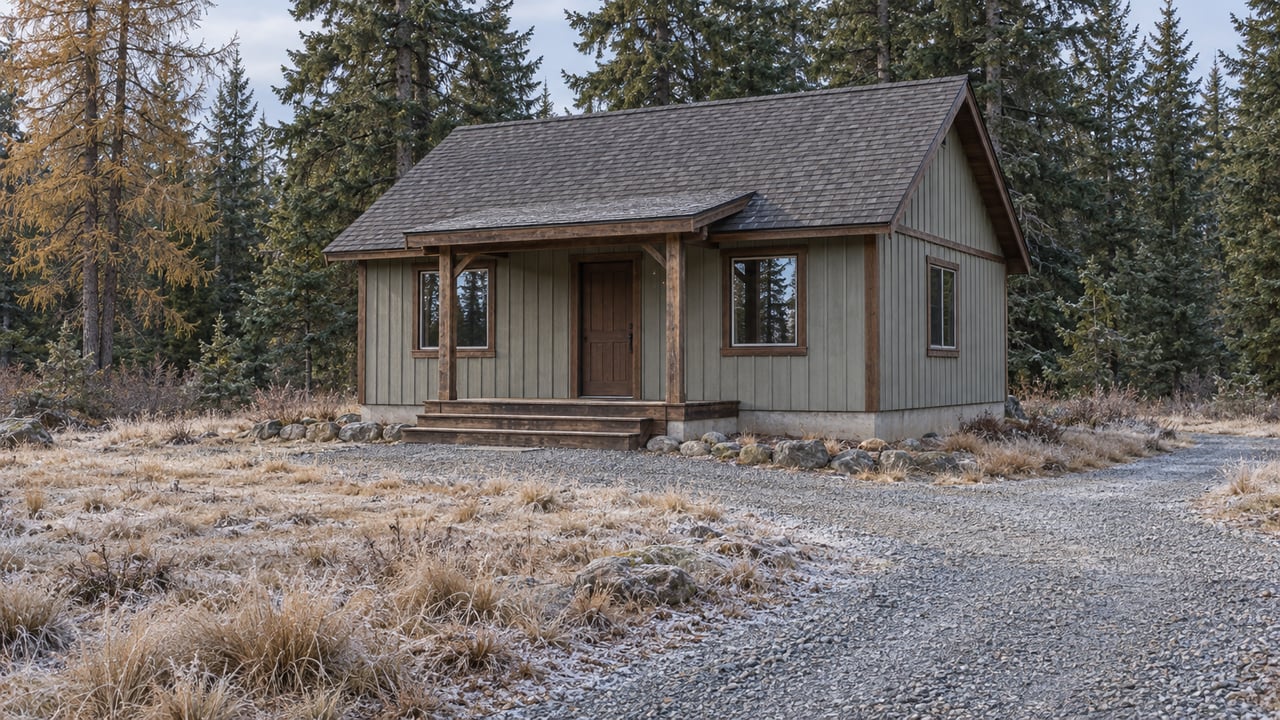
You're about to close on a cabin near Rexford, and the tax figure in the listing packet looks reasonable. Which owner does that number describe? Since tax year 2026, two identical houses on the same Lake Koocanusa road, appraised at the same value and paying the same levies, can carry very different tax bills, depending on whether the owner lives there.
That changes how you should read the tax line on any Rexford listing. Under Montana's new structure, the number shows how the seller used the property. Your bill will show how you use it, and on the cabins and seasonal homes that make up much of the Koocanusa market, those two numbers can be far apart.
Same house, same district, two tax rates
The Montana Department of Revenue now taxes residential property at two different rates. A home enrolled as the owner's principal residence gets a tiered rate. Per DOR's 2026 tax information page, that's 0.76% on the first $378,000 of market value, 0.90% on the next slice up to $756,000, 1.10% up to $1,511,999, and 1.90% on anything above that.
Second homes, short-term rentals and vacant residential lots pay a flat 1.90% on the whole value.
Those percentages produce a property's taxable value, and local mill levies are then applied to it. So the bill moves in step with taxable value, and here's how that compares at a few price points around Rexford. The figures below are worked straight from DOR's 2026 rates. They show taxable value, before any mills are applied.
| Market value | Enrolled principal residence | Second home at flat 1.90% | Multiple |
|---|---|---|---|
| $300,000 | $2,280 | $5,700 | 2.5x |
| $400,000 | $3,070.80 | $7,600 | about 2.5x |
| $600,000 | $4,870.80 | $11,400 | about 2.3x |
On any home valued under $378,000, the math is exact. 1.90 divided by 0.76 is 2.5. Whatever the combined mills for that Rexford parcel add up to, the mill-based tax for a second-home owner is two and a half times what a full-time owner pays on the same house. Any flat special fees on the bill are charged on top of that.
Why the multiple matters more than this year's budget news
Lincoln County's new budget trims its share. The Western News reported that the county's $16.2 million FY2027 budget, adopted Sept. 2, means a reduction on next year's bill of $24.59 for a $100,000 property, $73.78 for a $300,000 property and $207.86 for a $600,000 property. The paper also reported that county taxes went up in each of the previous three fiscal years.
That's real money and good news. But it's a budget decision that moves a bill by dollars. The classification multiplies the mill-based tax itself. If you're comparing a $300,000 Rexford cabin with a similar home elsewhere, the question that sways your carrying cost most isn't which county trimmed its levy. It's whether the home will be your principal residence.
What decides your 2026 rate if you close this winter
Bills for 2026 are the first ones issued under the new system. DOR says county treasurers usually mail real-property tax bills in late October. The first payment is due Nov. 30 or 30 days after the notice's postmark, whichever comes later, and the second is due May 31. The Flathead Beacon noted bills arriving in mailboxes at the end of October.
If you're closing in November or December, the 2026 rate on your new home was set before you got there. DOR's Homestead FAQs cover three common situations.
- The seller lived there full-time and enrolled. The reduced rate stays on the property through the end of the calendar year, even after ownership changes. To keep it in 2027, you have to file your own homestead application.
- The seller used it as a cabin and you plan to live there full-time. The home was never enrolled, so 2026 is taxed at the flat 1.90%. If the home was your principal residence for at least seven months of 2026, you may be able to request a refund of the difference between Jan. 1 and May 31, 2027. A November buyer won't reach seven months in the new house alone. DOR does let you count time in your previous principal residence and the new one together, as long as the two stays run back to back for seven months. Its example of selling in July and moving in during August qualifies. Selling in July and moving in during September doesn't.
- The cabin will stay a cabin. It pays the flat 1.90% now and going forward. The refund is limited to homes that were the owner's primary residence. DOR's refund page lists second or vacation homes, rentals and vacant property as ineligible.
Even when a refund applies, DOR requires 2026 taxes and all prior-year taxes to be paid in full first.
The family cabin has no exemption
Some Koocanusa cabins have been in the same family for decades, and many owners assume long ownership counts for something. DOR addresses this directly in its FAQ, answering a question about a lake cabin a family has held for more than 70 years:
"If the cabin is not the principal residence of one of the current owners, it will not qualify for the Homestead Reduced Rate."
According to the same answer, the only other route is the long-term rental rate. That requires renting for periods of 28 days or more, for at least seven months of the year, to tenants who live in the cabin as their residence. A cabin the family uses every summer can't meet that test and still be the family's summer place.
Who holds title matters too. A revocable grantor trust can qualify if the grantor lives in the home as their principal residence. Homes held by an LLC or an irrevocable trust can't get the homestead rate, though they may qualify for the long-term rental rate if they meet its rules. If your principal residence is in another state or across the border, a Rexford cabin falls under the flat rate by definition.
The Daily Montanan reported in February that lawmakers were hearing concerns about higher taxes on family vacation cabins as second homes took on more of the burden.
Dates between now and spring
- Late October 2026: 2026 bills mailed, per DOR's usual timing.
- Nov. 30, 2026, or 30 days after the postmark, whichever is later: first payment due.
- Jan. 1, 2027: 2026 refund requests open for eligible primary residences that didn't receive the reduced rate.
- March 1, 2027: deadline to enroll a newly purchased home for the 2027 homestead rate. Enrollment for 2027 opened May 4, 2026.
- May 31, 2027: second-half payment due, and the last day to request a 2026 refund.
The 2026 deadline moved once. The Daily Montanan reported that the 2026 filing window was extended to March 20 after technical problems with the portal. DOR's FAQ now lists March 1, 2027 as the deadline for next year.
The rules are being challenged in court
The tiered structure is current law, and it's in litigation. The Flathead Beacon reported that Sens. Greg Hertz and Tom McGillvray and former Sen. Keith Regier filed a second lawsuit on Oct. 13 in Gallatin County District Court against the state, DOR and DOR director Brendan Beatty. The suit argues that SB 542 violates equal protection by taxing properties in the same residential class at different rates. Oral arguments in their first lawsuit, which challenges how the bill passed, were scheduled to begin Oct. 21.
A separate effort to cap property-tax growth won't change anything this cycle. Montana Free Press reported that Sen. Wylie Galt suspended the CI-134 initiative before its June signature deadline, so it didn't make the November ballot. For now, the rates DOR has published for 2026 are the ones on the bills.
A few questions I hear
How do I check whether a Rexford home is enrolled right now? DOR's Homestead Enrollment Verification Tool looks up a property by its geocode. It's worth running before you treat the seller's bill as a guide to yours.
Is the homestead rate the same as a homestead declaration? No. DOR says a homestead declaration filed with the County Clerk and Recorder protects home equity from creditors and doesn't qualify a home for the reduced rate.
Does the seven months have to be in a row? Not for the basic test. DOR says the months don't need to be consecutive, and short absences generally don't affect eligibility. The consecutive rule applies only when you're combining time across two homes during a move.
Where do I see or pay a Lincoln County bill? The Lincoln County Treasurer offers an online records search and online payment.
This post is general information, not legal, tax or financial advice. Before you rely on any of it, confirm your own situation with DOR, the Lincoln County Treasurer or a tax professional.
When I walk a buyer through a Rexford cabin, the tax line is one of the first things we rework. We start from how you plan to use the place, not how the seller did, so the carrying cost you sign up for is your own. If you're weighing a Koocanusa property this winter, or you're selling one and want to present its tax history clearly, Charity Waldo can sit down with you before the March 1 deadline. Talk to Charity and get your free valuation.